
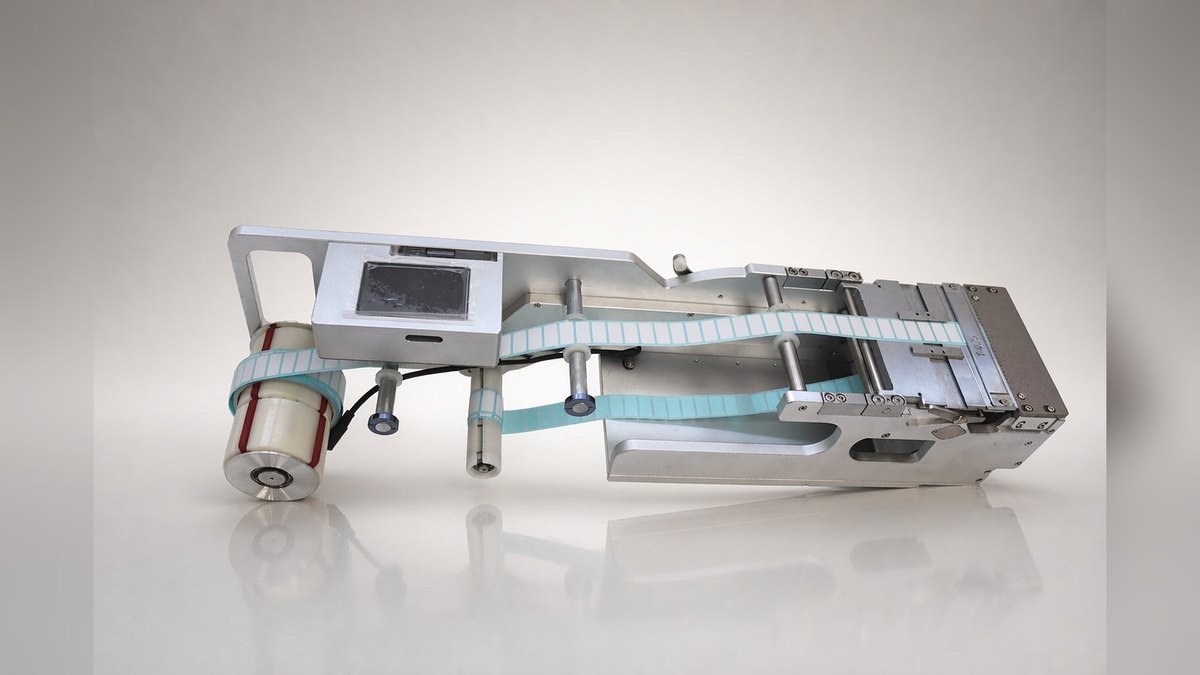
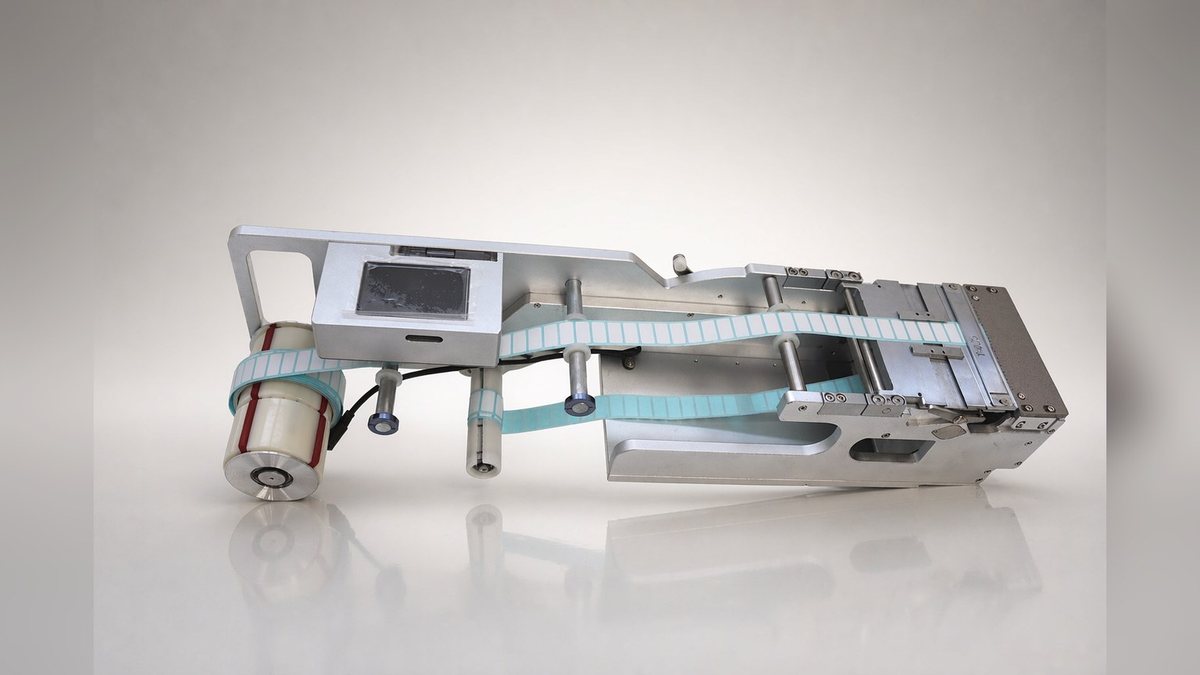
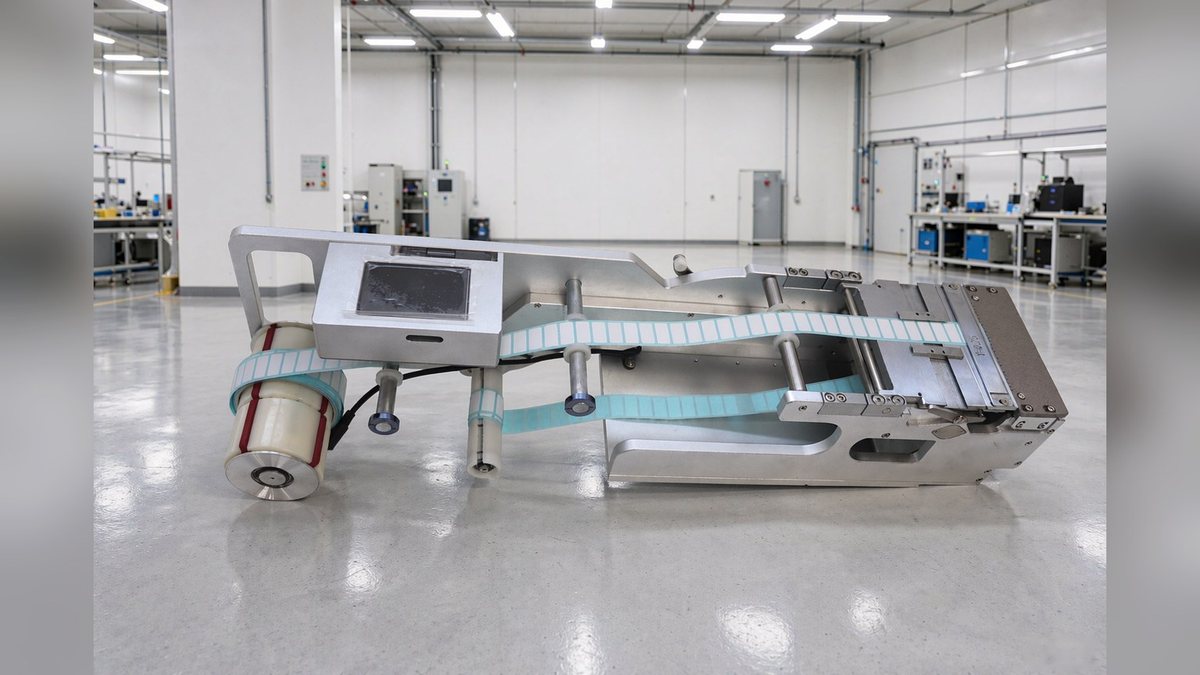
The LFJUKI-100 is a roll-type label feeder from BestFeeder for JUKI placement machines. It mounts in the machine’s existing feeder station, and the placement head picks labels directly from the feeder’s pick position, completing them in the same pass as components. It supports label widths from 5 mm to 98 mm, with 1–12 lanes and 1–12 fiber sensors. A single feeder can be built as a single row or multiple rows as needed, dispensing a whole row of labels at once. The body measures 640 × 135 × 160 mm and weighs 7.5 kg. For lines with many label types on the board that want labels fed together with the placement machine, it brings the labeling step into the placement program.
Main Parameters
| Item | Value |
|---|---|
| Model | LFJUKI-100 |
| Compatible models | JUKI KE700 / KE2000 / FX / JX / JM series |
| Dimensions (L×W×H) | 640 × 135 × 160 mm |
| Weight | 7.5 kg |
| Label width | 5–98 mm |
| Label length | L2–40 mm |
| Number of lanes | 1–12 |
| Fiber sensors | 1–12 channels |
| Operating voltage | 24 V DC, current must be greater than 2 A |
Structure and Configuration
The label roll is loaded onto the label mounting sleeve, passes through the winding roller shaft, and is limited by the retaining ring to prevent the roll from swinging side to side. Lateral position is set by the label guide width-limiting slider: use a hex wrench to loosen the set screw inside, move the guide block to the position matching the roll width, then tighten. The label strip then passes through the pressure plate, whose height is adjusted for label thickness with four set screws; press the pressure cover lever down to open the pressure cover, the strip is clamped between the pressure cover and the drive shaft, release the lever to clamp, and the peeled empty backing strip goes to the waste strip recovery sleeve.
The number of lanes is configured from 1 to 12 as needed, each row with its own feeding action and fiber detection; multiple rows can feed simultaneously, or only some rows can be used per the program. The panel is a touchscreen, where the working mode (auto/manual), feed position, feed speed, feed delay, and production count are all set. The production count is counted per row dispensed, and a long press clears it; the parameters also allow setting the Chinese/English format and the communication signals for linking with the placement machine, provided the signal cable is connected.
Application Scenarios
The LFJUKI-100 covers a fairly wide range of materials: paper labels, FPC stiffener steel sheets, Mylar tape, foam, dust mesh, and high-temperature tape — all roll-type materials can be used. Material size compatibility is strong; within the feeder’s acceptable size range, simply change to a different roll size. Roll feeding is common in packaging, 3C, FPC, and electronics industries; the benefit of multiple lanes is that one loading covers multiple label positions, reducing mid-run material changes.
There is no need to buy a separate labeling machine — with this feeder, following the placement machine completes the application. Conversely, for large label areas, attachment positions requiring visual alignment, or workpieces that are not PCBs, a labeling machine line is still more suitable.
Installation and Adjustment
Before mounting, check the available height and load capacity of the feeder station; the body is 640 mm long, so the mounting position must allow for that length. Power is 24 V, current greater than 2 A; avoid sharing a power plug with high-power equipment. The peeling blade and receiving platform must not be struck or contaminated. During transport and installation, take care that feeders do not collide with each other or with other objects; impacts cause subtle damage and affect stability.
When threading the strip, keep the strip angle straight; deviation directly shows up at the peel position. For large labels or labels prone to falling off or peeling early, the strip can bypass the spring winding shaft to avoid an excessive angle causing early peeling; for small labels that are hard to peel, switch the peeling blade to the side with a smaller angle. Adjust the fiber amplifier to this standard: the working set value should be about 200 greater than the sensed value with no material; light on with material, light off without. The feed position on the screen is adjusted with label size; when not chasing the placement cycle time, set feed speed at 30–50, prioritizing stability; where the robot picks slowly and labels feed fast, add a little feed delay, in units of 0.1 s. After adjustment, feed once manually to confirm peeling and position, then switch to auto.
FAQ
Q: Can one feeder supply several label sizes at once? A: Different rolls within the feeder’s acceptable size range can all be loaded; when changing material, just readjust the guide width-limiting slider to the roll width.
Q: Will multiple lanes interfere with each other? A: Each row has its own feeding action and fiber detection, used per the program; when threading, confirm the limit and pressure plate height row by row to avoid one row deviating and affecting the whole row’s feeding.
Q: The fiber stays lit or stays off? A: First check whether the working set value is about 200 greater than the sensed value with no material; too low misjudges material as present, too high misjudges it as absent. Then confirm whether the label actually passes the fiber detection point.
After-Sales and Spare Parts
Before shipment, parameters are adjusted according to the sample provided by the customer; usually it can be used once powered on after receipt. For unfamiliar operations, online remote guidance can be arranged; when parts need replacement, send the product back for handling. The warranty period is one year from the date of purchase; during the warranty period, failures caused by the product’s own quality issues are repaired free of charge. Beyond the warranty period, or in cases of disassembly by unauthorized personnel, exposure to solvents, acids, alkalis, or humid environments, or abnormal external impact, free service does not apply; repair service is still available beyond the warranty period, billed by the actual parts replaced and labor hours. Spare parts are per contract; common wear parts such as peeling blades, pressure plates, sleeves, and fibers can be provided.
To confirm the LFJUKI-100 configuration, only three pieces of information are needed: the JUKI model in operation, the label width and length, and how many rows need to feed simultaneously. Send these three items to Kenny Pan, Sales Manager, mobile/WeChat +86 134 2139 1163, Sales@baxida-tech.com, and we will provide the mounting specifications and supporting list.