
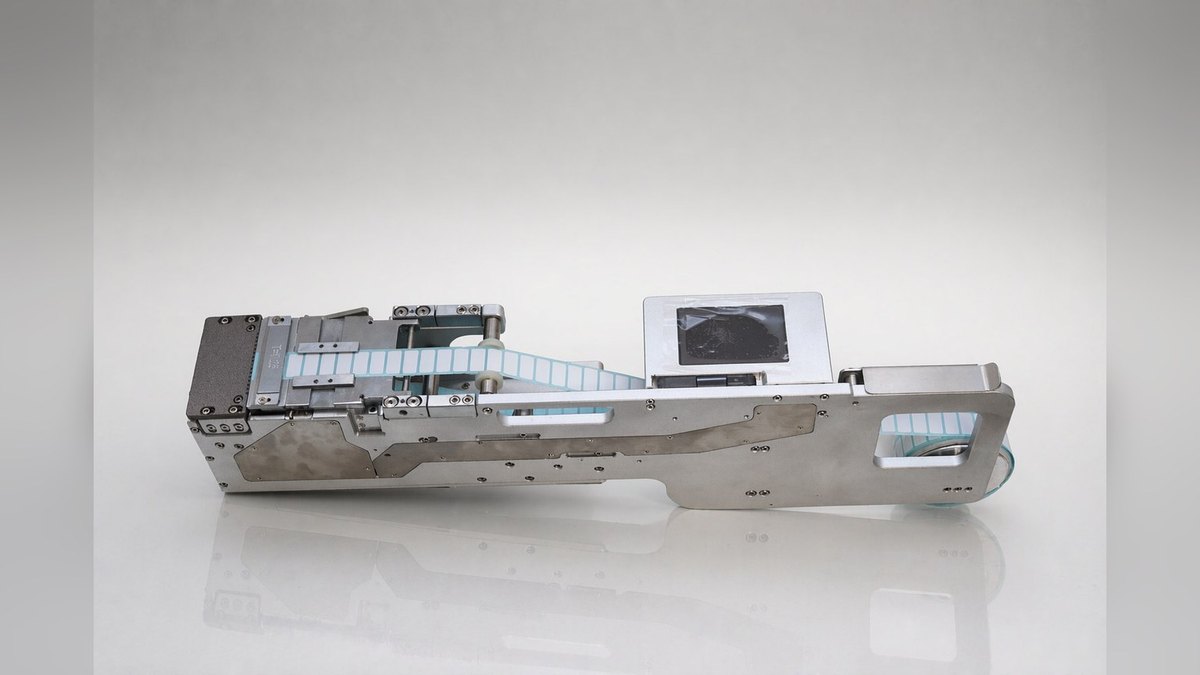
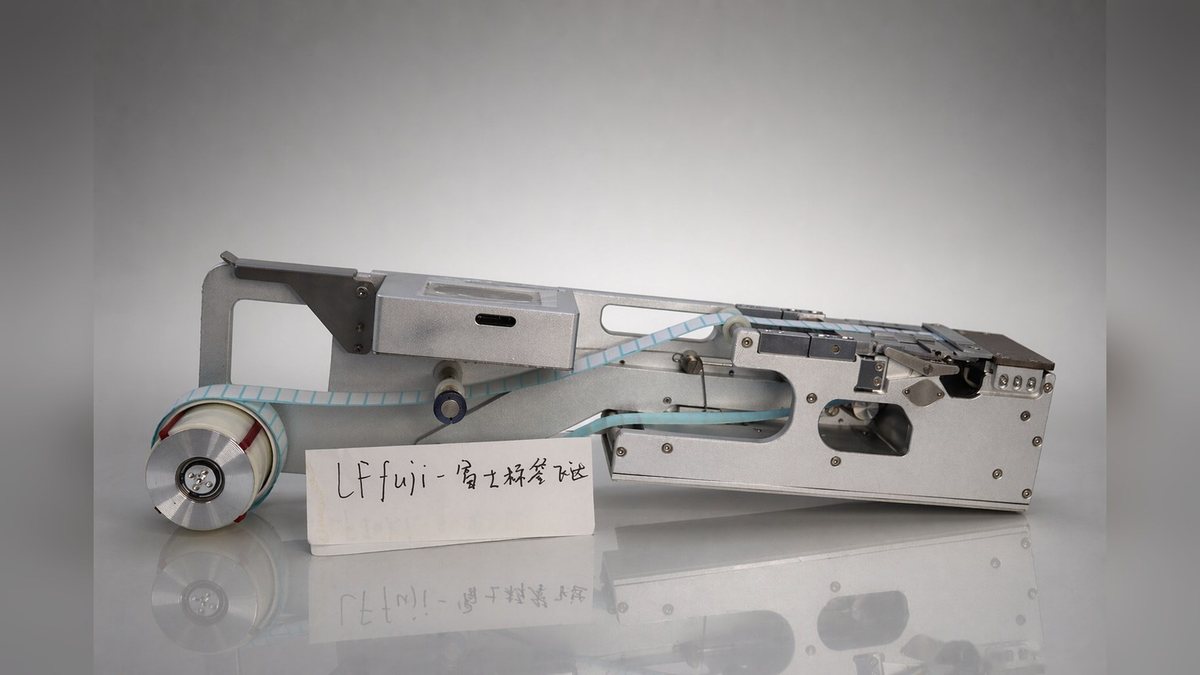
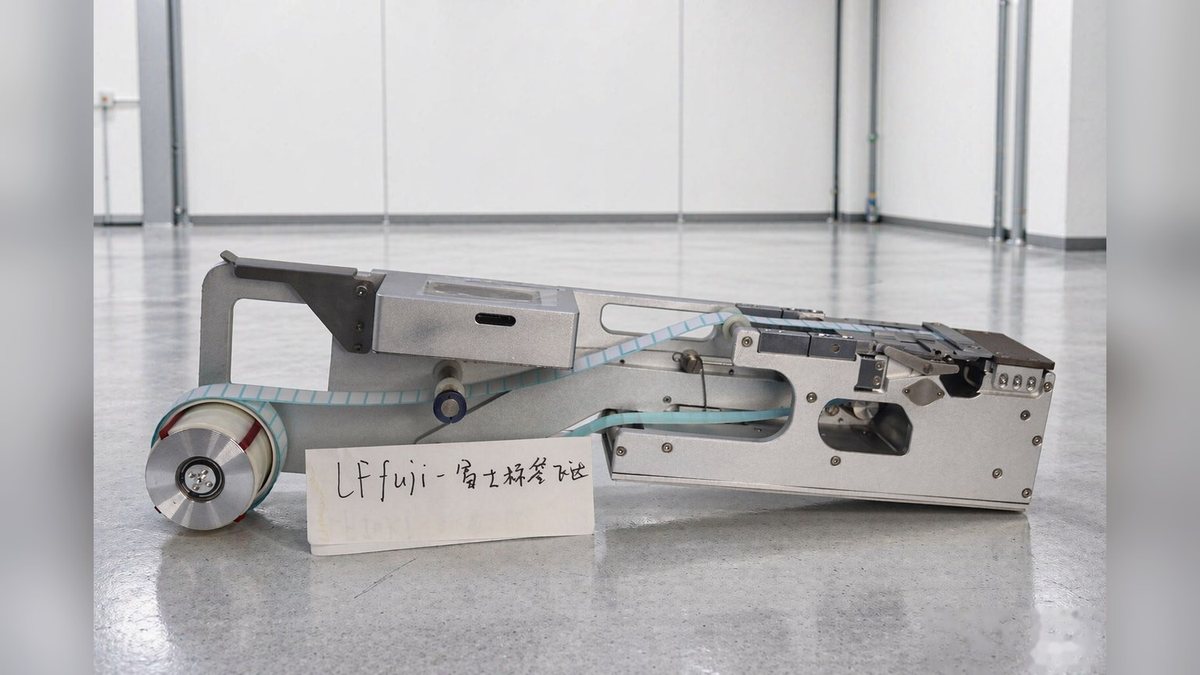
LFFUJI-32 is a reel label feeder by BestFeeder for FUJI NXT series mounters. It mounts on an existing feeder slot of the mounter, and the placement head picks labels from the feeder’s pick position, completing them in the same pass as components. Its label width is 2–23 mm, the single lane is fitted with one fiber sensor, and the body is 630 × 40 × 170 mm and weighs 3.6 kg. For lines already running NXT with only 2–23 mm wide small labels to apply on the board, this model lets you merge the labeling process into the placement program, with no need for a separate offline labeler.
Main Parameters
| Item | Value |
|---|---|
| Model | LFFUJI-32 |
| Compatible model | FUJI NXT series |
| Dimensions (L×W×H) | 630 × 40 × 170 mm |
| Weight | 3.6 kg |
| Label width | 2–23 mm |
| Label length | L2–40 mm |
| Number of lanes | 1 |
| Fiber sensor | 1 channel |
| Operating voltage | 24 V DC, current must be greater than 2 A |
Structure and Configuration
The tape path starts at the label mounting sleeve: after the reel is placed on the sleeve, the tape passes over the winding roller, and a retaining ring limits the reel to prevent side-to-side sway. The guide width-limiting slider handles lateral positioning; loosen the set screw inside to move the guide block according to reel width. The tape then passes through the pressure plate, whose height is adjusted by four set screws according to label thickness. Press the pressure cover lever down to open the pressure cover; the tape is clamped between the pressure cover and the drive shaft, and releasing the lever clamps it. The empty tape after peeling is collected by the waste tape recovery sleeve.
The machine is a single-lane structure, with one fiber sensor watching the material presence at the pick position. The body width is only 40 mm, so it takes no extra space when mounted on an NXT feeder slot. On one side of the panel is a touchscreen, where the working mode (auto/manual), feed position, feed speed, feed delay and production count are set. On-screen parameters also allow setting Chinese and English formats, as well as communication signals for linking, provided the signal cable is connected.
Application Scenarios
The 2–23 mm narrow label range covers reel materials such as FPC stiffener steel sheets, Mylar tape, dust mesh, foam and high-temperature tape. It suits cases where there is only one or a few small labels on the board: feeding and placing together with the placement program saves a separate labeler and one material transfer. For high-mix low-volume lines with frequent changeovers, switching labels only requires changing the reel and adjusting on-screen parameters.
A trade-off should be noted: where the label area is large, the attachment position relies on vision alignment, or the workpiece itself is not a PCB, you should look at a labeler line rather than using a feeder that follows the mounter.
Installation and Debugging
Before installation, confirm the available height and load capacity of the feeder slot. The LFFUJI-32 body is 630 mm long, so this length must be allowed for at the mounting position. The power supply is 24 V, current must be greater than 2 A, and do not share the same power plug with high-power equipment. Thread the tape along the path in the previous section, keeping the tape angle straight; deviation will make the peel position unstable. For small labels that are hard to peel, turn the peel blade to the side with a smaller angle.
The focus of debugging is the fiber amplifier: set the working setpoint to about 200 greater than the sensing value in the no-material state (example value in the manual); when the light is on with material present, detection is stable. Adjust on-screen parameters in this order: first switch to manual mode for loading and reel changes, and set the feed position according to label size; when not chasing placement takt time, set feed speed to 30–50 for more stable feeding; where labels are small and the robot picks slowly, add a little feed delay, in units of 0.1 s. After adjustment, feed a sample label once in manual mode to confirm complete peeling and correct position, then switch to auto mode for batch running.
FAQ
Q: What if the label is not fed into position? A: Increase the feed position value. If the value is too small, the tape is not fed enough; if too large, the label lifts or overshoots. Fine-tune in small steps according to the actual state.
Q: The fiber does not detect material? A: Check whether the working setpoint is about 200 greater than the sensing value in the no-material state. If the setpoint is too low, it will always judge material as present; if too high, it will falsely judge no material.
Q: Peeling is incomplete, or small labels are lifted? A: Turn the peel blade to the side with a smaller angle, and confirm whether the tape is deviating and whether the pressure plate height has been adjusted according to label thickness.
Q: How to operate when changing material? A: Switch to manual mode before loading and changing material. In manual mode you can feed step by step, and also move the reel forward or back a small step. After changing, switch back to auto mode to continue production.
Q: Can it link with the mounter? A: Yes. On-screen parameters support setting communication signals with the mounter, provided the signal cable is connected. Check the wire sequence and signal requirements against the wiring and communication instructions.
After-Sales and Spare Parts
Before shipment, product parameters are adjusted according to the sample provided by the customer, so it is usually ready to use once powered on after receipt. Online remote guidance can be arranged for unfamiliar operations, and if parts need replacement, send the product back for handling. The warranty period is one year from the date of purchase; during the warranty period, free repair is provided for faults caused by the product’s own quality issues. Beyond the warranty period, or in cases of disassembly by unauthorized personnel, exposure to solvents, acids, alkalis or humid environments, or abnormal external impact, free service does not apply; repair service is still available outside the warranty period, charged according to the actual replaced parts and labor hours. Spare parts are as agreed in the contract, and common wear parts such as peel blades, pressure plates, sleeves and fibers can be provided.
To confirm whether LFFUJI-32 can go on your line, only two pieces of information are needed: the FUJI NXT model you are running, and the label width and number of columns. Send these two items to Kenny Pan, Sales Manager, mobile/WeChat +86 134 2139 1163, Sales@baxida-tech.com, and we will provide the mounting position specifications and supporting list.