
Conclusion
Most quote rounds back and forth are not about price disagreement, but about four figures not being provided all at once: label width and length, reel specs and liner, placement machine brand/model and slot, and per-shift usage and changeover rhythm. These four correspond respectively to model tier, peel and feed settings, interface and form factor, and column count and spare unit quantity. Ask with all of them ready, and the model and price usually land in one round.
1. Label Width and Length: Model Tier Is Cut by This
The model of a roll-label feeder is segmented by label width. Taking the Fuji platform as an example, LFFUJI-32 covers 2–23 mm, LFFUJI-100 covers 2–58 mm; the JUKI platform’s LFJUKI-32 is 5–23 mm, LFJUKI-100 is 5–98 mm; the Panasonic platform has three tiers, LFPANA-32 at 2–23 mm, LFPANA-60 at 2–58 mm, LFPANA-100 at 2–98 mm. Whichever segment the width falls into determines the model tier.
So don’t report “roughly 30 mm”—30 mm sits right between the 23 and 58 tiers, and whichever you report will come back for another confirmation. Give a measured value or the label drawing: length by width, individual spacing, label exit direction, corner radius. Label length must also be stated; the model’s nominal label length range is L2–40 mm, and labels outside the range need confirmation on whether they can run.
Piece labels are a different calculation: look at the individual label size and the full liner size, not the tape width.
2. Reel Specs and Liner: Determines Peel Blade and Starting Speed
Three quantities are needed: reel inner diameter, reel outer diameter, and how many meters one roll holds. Without the label supplier’s spec sheet, measure the reel inner and outer diameters with calipers, then multiply the advance per label by the number of labels per revolution to estimate the roll capacity.
The liner material deserves a separate mention. Glassine liner and transparent PET liner differ in light transmission and peel feel, directly affecting two settings: which side the peel blade uses, and which value the feed speed starts from. Changing the liner on the same feeder usually requires readjusting both.
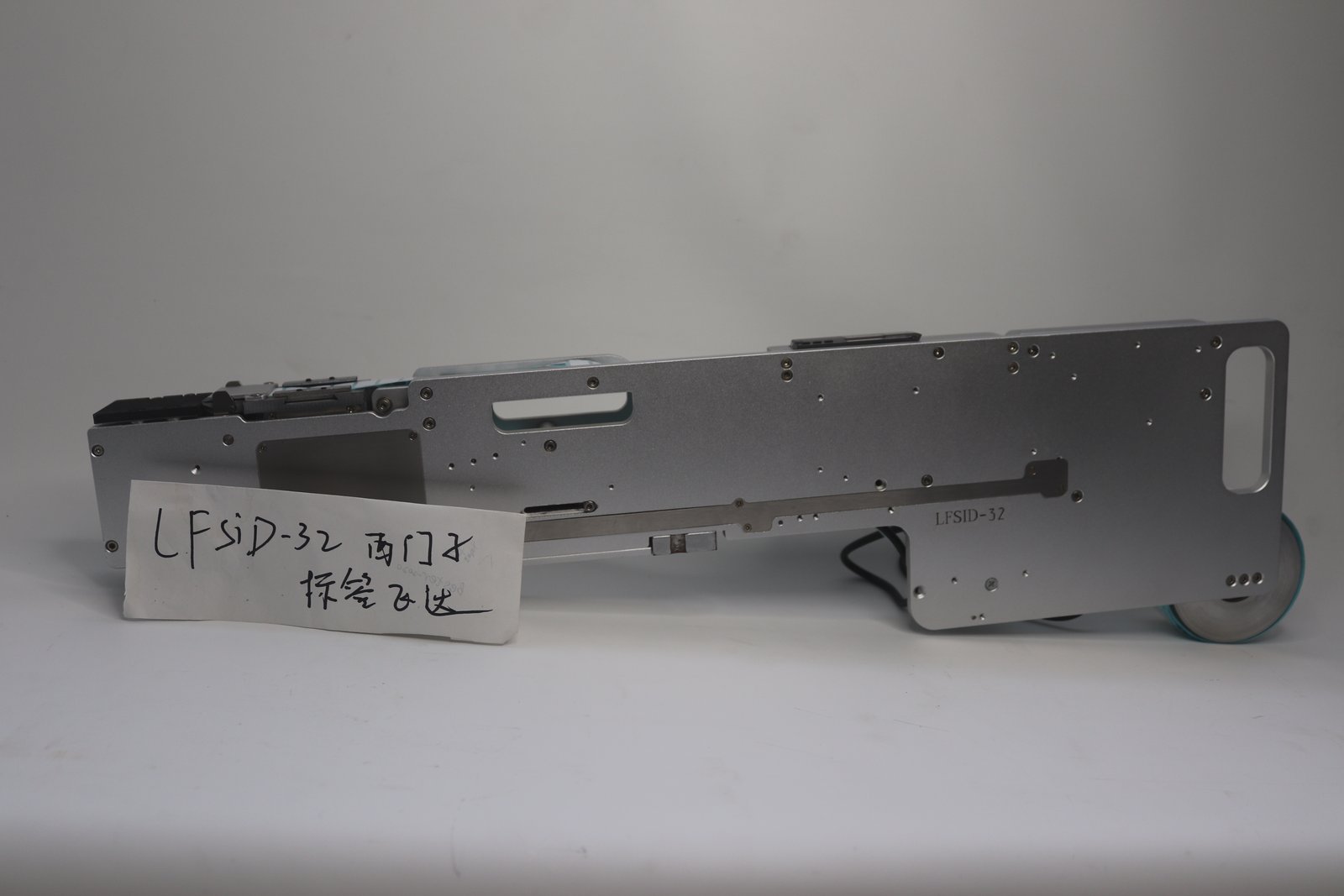
3. Placement Machine Brand, Model and Slot: Determines Dedicated or Standard Version
Within the same brand, different series have non-interchangeable interfaces and form factors. Yamaha’s YS series and YV series are written separately in the model suffix; on the ASM side, LFSID-100 corresponds to the D series, LFSIX-60 to the X series; the Samsung (Hanwha) platform uses LFSUMSUNG-60. Write the full model from the machine nameplate, not just the brand.
The slot must also be stated: which slot it will be mounted in, whether adjacent slots have space, and whether other feeders on the machine need to be moved. Narrow-body machines can save space in small slots, but the space-saving solution requires knowing the on-site dimensions first.
4. Per-Shift Usage and Changeover Rhythm: Determines Column Count and Spare Units
How many shifts per day, how many labels consumed per shift, how many changeovers, and how many placement machines on the line. These figures determine how many columns to choose (the model table has column counts from 1 to 14) and the reel size; the downtime loss from line stoppage for changeover is usually worth calculating more than the price difference of the equipment itself. For how to match quantities, see How Many Label Feeders Does One Production Line Need.
Three Things to Clarify Along the Way
- Retrofit or first deployment: Whether similar equipment is already in use determines whether machine modification, signal cable addition, and mounting accessory configuration are needed.
- Special structure requirements: Structures such as punching, retraction, bottom peel, cutting, and easy-tear adhesive each have corresponding segments in the model table; confirm by label material and peel method, and don’t wait until the quote stage to discover a standard structure was selected.
- Destination and currency: Domestic quotes are in RMB, export quotes in USD; trade terms are confirmed with the destination, and specific terms are subject to the quotation.
Two Common Rework Points
- Reporting only width, not length: The width tier is selected correctly, but only at loading time is it discovered that the label length exceeds the stroke of the retraction or punching structure, requiring structure reselection.
- Reporting usage at peak season: Reporting figures based on peak shipping shift output pushes the model up one tier, while routine small-batch runs don’t need that much load capacity, leaving the selection mismatched with the usage scenario.
The Easy Way: Take Three Photos
The full label roll, one label with liner, and the placement machine model nameplate—three phone photos plus one sentence “how many used per shift” basically determines the model and price. Images are more accurate than text descriptions and save the back-and-forth.
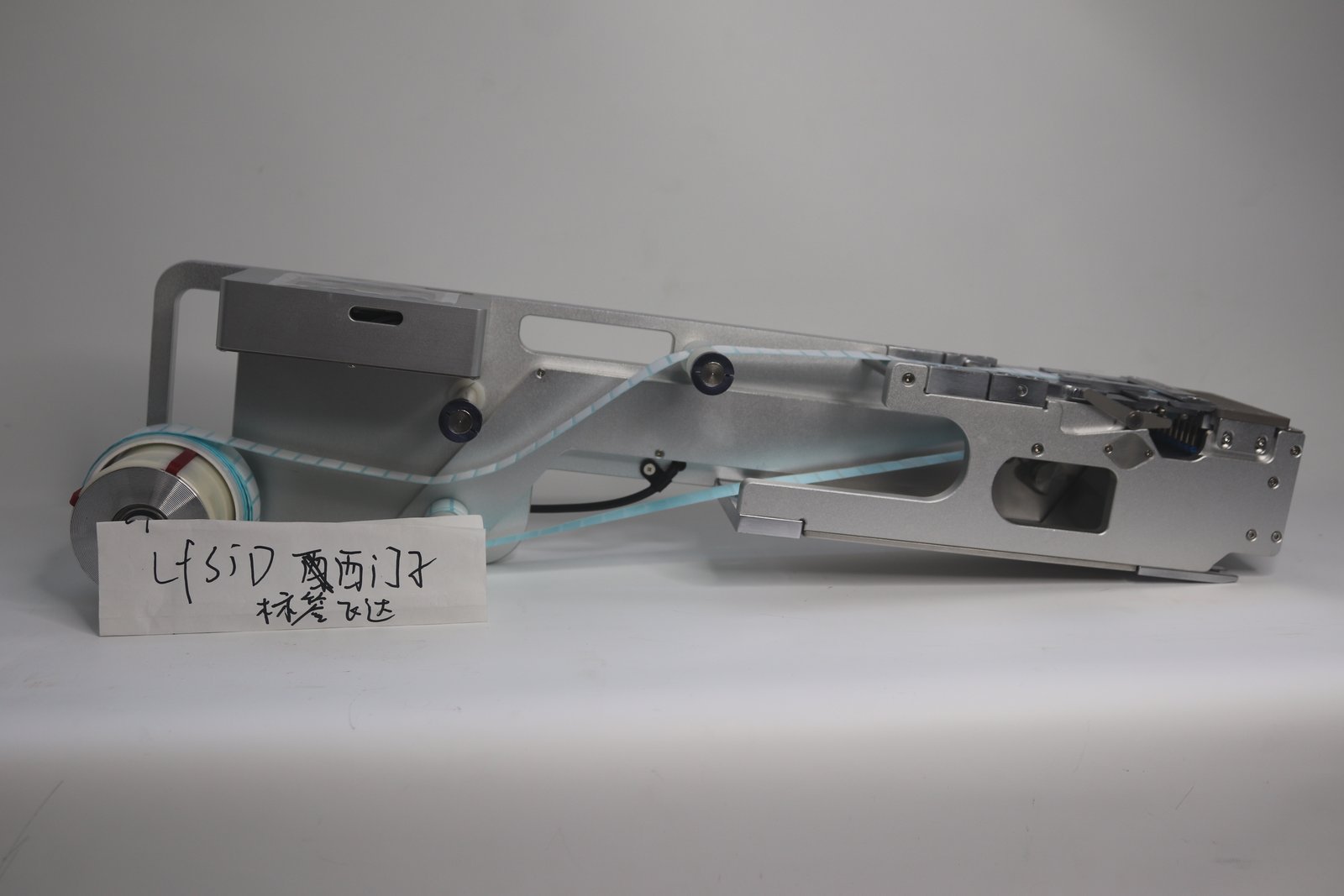
Include These Items When Reporting to Us
| Item | How to Provide | What It Determines |
|---|---|---|
| Label size | Drawing or measured length×width, individual spacing | Model tier, whether it can run |
| Label length | Measured value, note whether over 40 mm | Whether structure needs change |
| Reel specs | Inner diameter, outer diameter, roll capacity | Changeover frequency, load capacity |
| Liner material | Glassine / PET, with photo | Peel blade direction, starting speed |
| Placement machine | Brand + nameplate model + slot | Dedicated or standard version, form factor |
| Usage | Labels per shift, changeover count, machine count | Column count, spare unit quantity |
| Current equipment | Whether similar equipment exists, whether retrofit needed | Accessories and installation work |
For model tiers and compatible platforms, see Label Feeder; for items you’re unsure about, send photos and on-site conditions, and confirm before quoting.