
Conclusion
This factory’s label process used to sit outside the SMT line: serial number QR codes were applied manually at the end of the line, and nameplates were printed by an outside vendor. On a high-mix low-volume line running five to eight model changeovers a day, that off-line manual step became the tail that dragged on every changeover. After mounting the LFSID-100 on the pick-and-place feeder station, labels follow the same SMT program as the components; a changeover only requires changing the feeder station address in the program.
The line and the previous labeling method
The line consists of two Siemens D-series pick-and-place machines, mainly producing industrial control boards and power modules, in batches from tens to hundreds of boards. Labels on the boards fall into two categories: PCBA serial number QR codes, 4 to 8 per row, positioned right next to components; and product nameplates, larger in size and fewer in quantity.
The previous approach was to assign one person from each of the two lines to do end-of-line labeling. QR codes relied on fixture alignment, with a fixture made per board type, so every model change meant a new fixture; nameplates were printed by an outside vendor, typically taking two to three days to come back, and rush orders had to wait. The problem was not labeling accuracy, but that changeovers required re-aligning fixtures and waiting again for outsourced parts.
Selection: why the LFSID-100
The LFSID-100 is a reel label feeder for the Siemens D series, with a body of 640 × 135 × 155 mm and a weight of 8.6 kg. It mounts on the pick-and-place machine’s existing feeder station and takes up no off-line floor space.
Its coverage was the main basis for this selection: label width 2–98 mm, length L2–40 mm, 1–14 lanes, 1–12 fiber sensor channels. Serial number labels are a dozen or so millimeters wide, nameplates close to 90 mm, and both fall within the capability of the same model, so there is no need for a different feeder per label type. The number of lanes is arranged according to the label types in the program; models with few types need only a single lane, while those with many types use multiple lanes to feed a whole row at once.
Setup and commissioning
Installation takes three steps: mount the feeder station, thread the material, align the fiber sensor. The fiber sensor’s working setpoint is adjusted according to the backing paper’s light transmission, placing the setpoint above the no-material reading so the threshold stays stable; feed position, feed speed, and feed delay are adjusted on the touchscreen, in the order of peel first, then speed, and after changing speed the position needs a follow-up fine adjustment.
The most time-consuming part of commissioning was the nameplate category. The labels are wide and the backing paper stiff, so during peeling the feed speed must be brought down to let the label clear the peel blade before being picked; if the speed is too high, the label edge lifts. Serial number labels are the opposite: narrow and light, so the speed can be set faster.
Changeover actions are shorter than before: the program switches to the new model, and the feeder follows the feeder station address; when label width changes, swap in a different set of guide width-limiting blocks and re-align the fiber sensor once. No more fixtures to make, no more waiting for outsourced parts.
Changes after going on-line
The most visible change is the process location: labels moved from off-line to on-line, the end-of-line labeling station was eliminated, and the person returned to visual inspection. First-article inspection of QR codes is done together with PCBA first-article inspection, with no separate scheduling.
Changeovers no longer require fixture preparation, and there are no more outsourced parts in transit—this was the main reason the factory decided to adopt the feeder. As for specific yield and cycle time figures, they follow the factory’s own statistical basis and are not repeated here.
FAQ
With many label types, does each type need its own feeder? No. First group by label width, then look at the lane requirements for labels of the same class; one multi-lane feeder can carry several types at once.
Which Siemens models can it be mounted on? The D series uses the LFSID series; the X series corresponds to the LFSIX series, which has a different feeder station structure, so the model must be selected according to the machine.
How long does a changeover take? Change the program address, change the material, and swap guide blocks if necessary; the feeder body does not need to be removed or reinstalled.
To check compatibility against your pick-and-place model and label dimensions, contact us directly: Kenny Pan · Sales Manager · Phone/WeChat +86 134 2139 1163 · Sales@baxida-tech.com
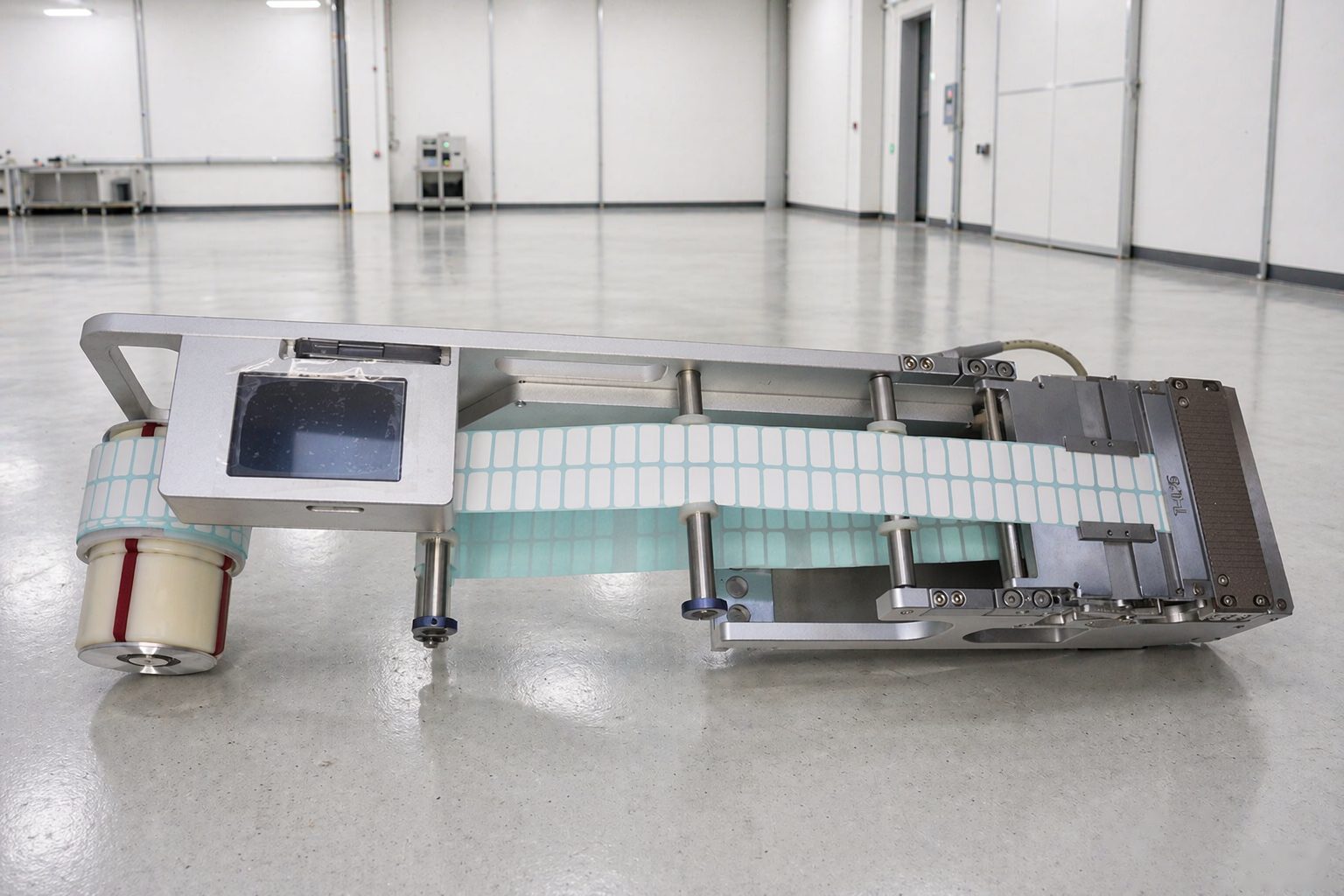
Shop floor photo: LFSID-100 label feeder
This article is compiled based on typical configurations of similar production lines; specific parameters and configurations are subject to actual incoming materials and machine models.