
Conclusion
Labeling machine selection starts with two things: how large the material can be labeled, and where it needs to be placed. BestFeeder labeling machines are divided into three structural lines — the multi-head vision labeling machine LM402, the single-head robotic arm labeling machine LM3216, and the belt track labeling machines BLM3520 / RLM3520 along with the vision-equipped BLM30 / BLM3020. The three lines differ in labelable material range, positioning method, and dimensions, and they suit different workstations.
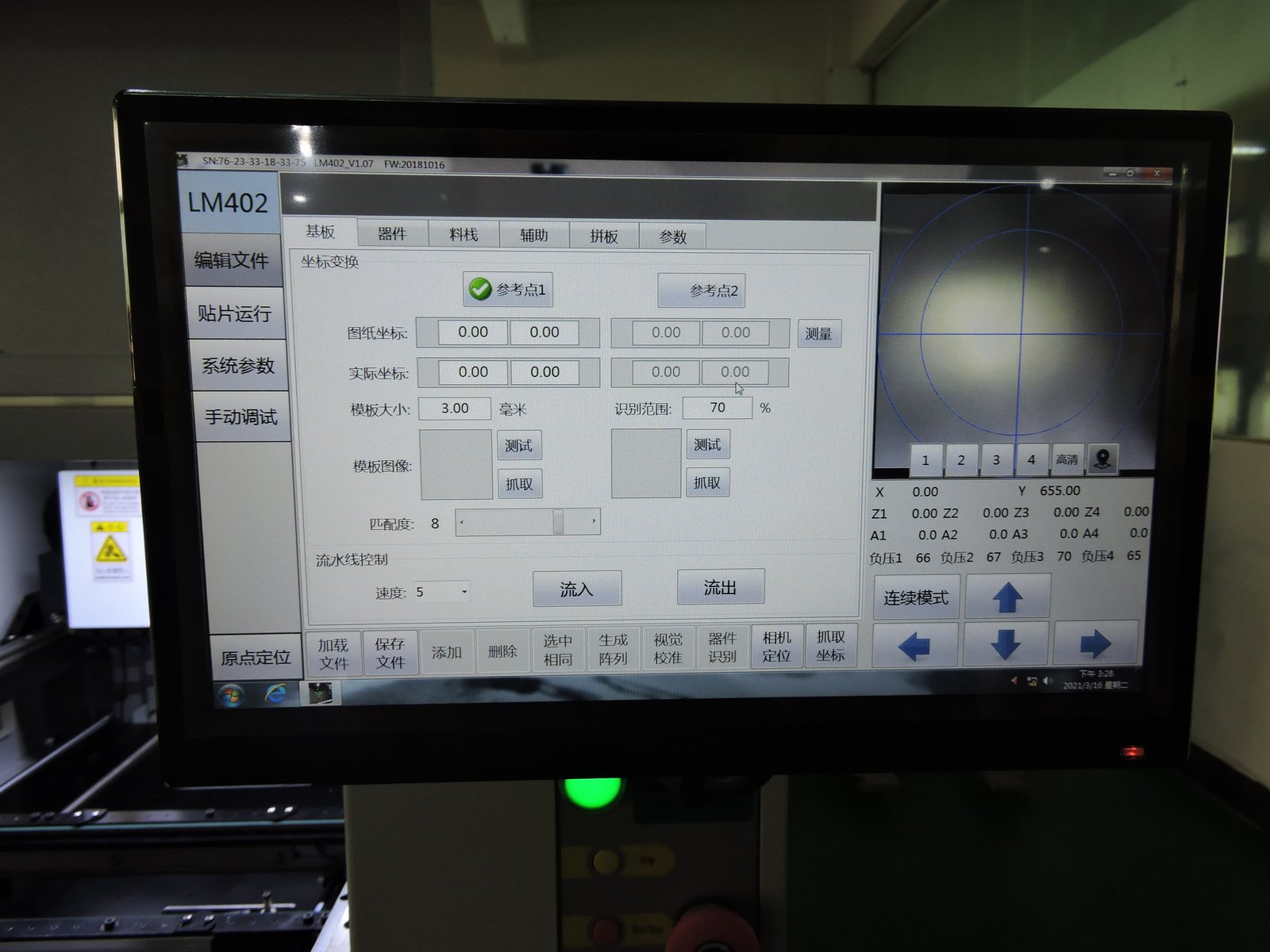
Multi-Head Vision LM402: Multiple Material Positions + Six Cameras
The LM402 handles PSA auxiliary materials from 1×1 mm to 50×50 mm: labels, iron pieces, film sheets, adhesive tape, foam, double-sided tape, and similar items.
- Placement range: XY maximum placement range X 100 mm × Y 500 mm (customizable); XY maximum travel range X 360 mm, Y 630 mm (customizable)
- Positioning method: XY axis servo control, Z axis stepper control
- Vision: 6 cameras total — 1 PCB camera, 4 small-part cameras, 1 large-part camera
- Feeding: 1 × 100 mm material position, or 3 × 60 mm material positions, or 4 × 32 mm material positions
- Barcode reading: custom option. Read by camera, LINK in the required format and upload to MES
- Dimensions: 950 × 950 × 1200 mm (customizable)
This line suits scenarios where multiple auxiliary materials need to be placed on one board simultaneously, and codes need to be read and uploaded to MES during placement.
Single-Head Robotic Arm LM3216: Single Station, Mechanical Positioning
The LM3216 takes a different approach — single station, positioned by mechanical structure, with a simple calibration relationship.
- Labelable materials: PSA auxiliary materials from 2×2 mm to 100×60 mm
- Travel range: XY maximum travel X 350 mm, Y 300 mm; Z axis maximum travel 100 mm
- Positioning method: X-direction mechanical clamping, Y-direction side clamping; optional MARK point camera + vision camera positioning
- Labeling speed: 1800 CPH
- Operating environment: WINDOWS 7 system, power supply voltage 220 V, power 0.5 kW
- Dimensions: 600 × 800 × 1500 mm
For scenarios with a single large material size, primarily mechanical positioning, and a clear cycle time, the single-head robotic arm is more straightforward.
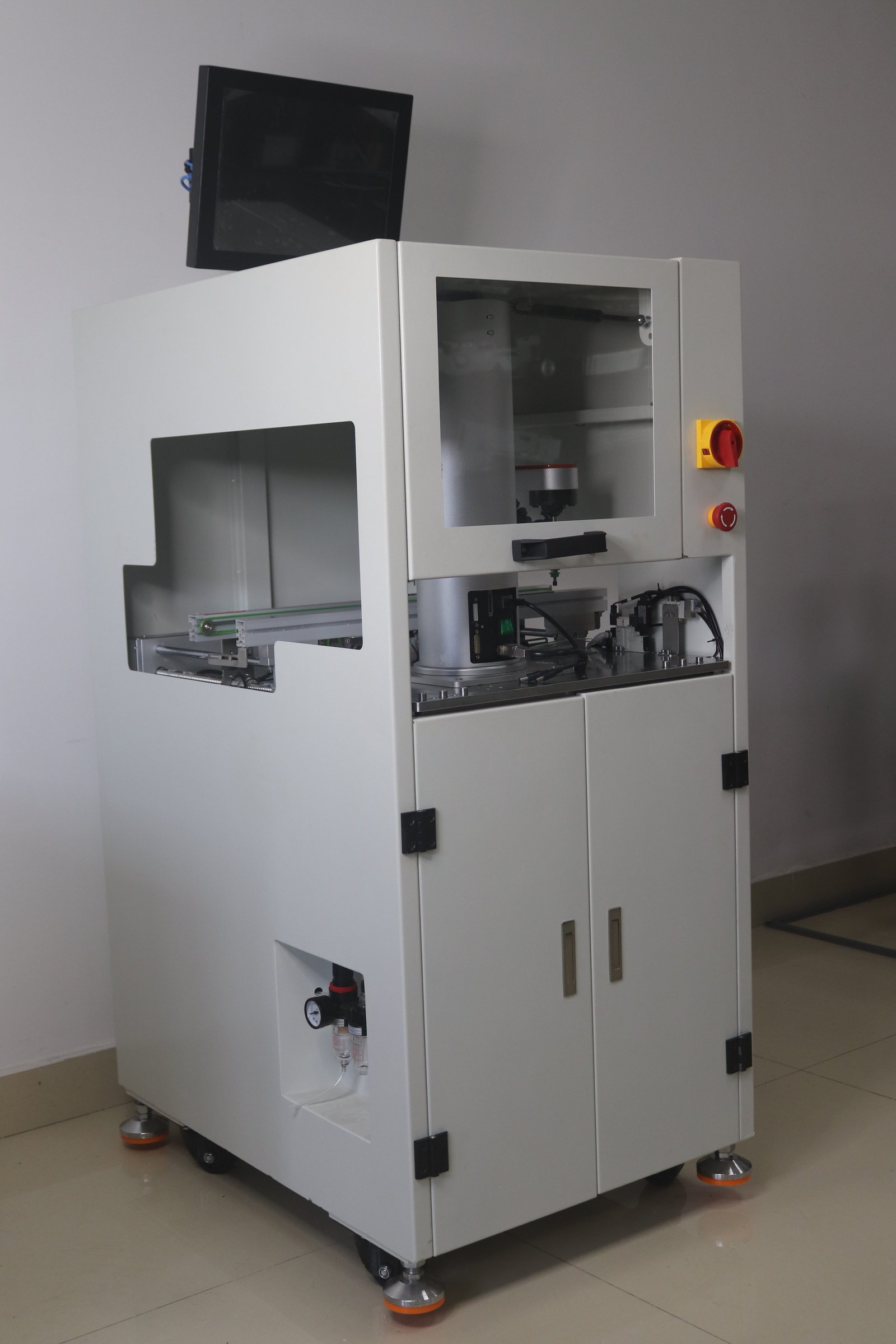
Belt Track BLM3520 / RLM3520 and Belt Vision BLM30 / BLM3020
These two lines use a belt track structure, where the workpiece passes through the labeling station on the belt; the BLM30 / BLM3020 adds vision on the belt. Their detailed parameters are currently marked as to be confirmed, and should be confirmed according to actual requirements during evaluation.
Comparison of the Three Lines
| Dimension | LM402 Multi-Head Vision | LM3216 Single-Head Robotic Arm | BLM Belt Track |
|---|---|---|---|
| Labelable materials | 1×1–50×50 mm | 2×2–100×60 mm | Confirm per requirements |
| Positioning | XY servo + Z stepper | X mechanical clamping + Y side clamping | Belt track conveyance |
| Material positions | 1×100 / 3×60 / 4×32 mm | Single station | Confirm per requirements |
| Code reading & MES upload | Custom | — | — |
| Dimensions | 950×950×1200 mm | 600×800×1500 mm | Confirm per requirements |
First Distinguish: Labeling Machine or Label Feeder
If the label itself is the pick-up object of the placement machine, using a label feeder (Feeder) directly on the placement machine station is sufficient — there is no need to add a separate labeling machine. BestFeeder label feeders such as the LFSID series (e.g., LFSID-100), and models like LFJUKI-32 and LFSUMSUNG-60 adapted to various placement machine platforms, are made for this scenario. Labeling machines suit scenarios where the workpiece itself cannot go onto a placement machine, or where a separate labeling station needs to be arranged outside the placement process. The material size applicability of the two types of equipment overlaps, so during actual selection, lay out the material list and process flow before deciding.
Include These Items When Requesting Specifications
Material size and material type, quantity per board, placement area, precision requirements, whether inline connectivity is needed, whether code reading and MES upload are required, existing workstations and available space. With these items complete, both selection and technical proposals can be clarified in one pass.
Further reading: Label Feeder Product Line, Labeling Machine Product Line.