
Conclusion
Automotive electronic parts carry more than one kind of label: traceability QR codes on the housing, dust mesh over acoustic holes, and waterproof breathable membrane at connector positions. The three differ widely in width and were originally run as two separate processes. With LFPANA-100, all three are arranged by lane on the same feeder and run through the placement program together with the components.
Production line and the original labeling method
The line uses Panasonic NPM series placement machines, mainly producing automotive sensor modules and headlamp control boards. Three types of incoming material: traceability labels are roll-format QR codes, a dozen or so millimeters wide; dust mesh is circular die-cut material on rolls with backing paper, from three millimeters to a dozen or so millimeters in diameter; waterproof breathable membrane is even thinner and tends to wrinkle when peeled.
The original division of work: QR codes were applied on the placement line, while dust mesh and breathable membrane were applied manually at a separate station. The problems with manually applying these two flexible die-cut materials were concentrated—the material is soft, curls when peeled off, and leaves marks when pressed by finger; positioning relied on fixtures and visual inspection, and with small module housings, a slight offset pressed the material against the edge of the standoffs.
Selection: why LFPANA-100
LFPANA-100 is a roll-label feeder for Panasonic models, with a body of 890 × 135 × 280 mm and a weight of 9.3 kg, mounted on the NPM feeder bank.
Three parameters cover all of this plant’s incoming material: label width 2–98 mm, covering everything from three-millimeter dust mesh to a dozen or so millimeter QR codes; label length L2–40 mm; 1–12 lanes and 1–12 fiber sensor channels, so the three material types can be arranged on separate lanes and fed as a full row at once.
Running three material types on one feeder saves more than equipment positions. The feed parameters for the three types can be set separately—QR codes can run fast, while dust mesh and membrane have their speed set according to their own peeling characteristics, with no compromise on a single set of parameters.
Setup and commissioning
Loading the feeder bank, threading the material, and aligning the fiber sensors—the first two steps are the same as for常规 roll material. The difference appears with flexible die-cut material.
Dust mesh is circular; when peeled, the edge lifts off the backing paper first while the center is still attached, and at higher speed it arches up at the pick position. The solution was to reduce the feed speed so the label fully leaves the backing paper before pickup, and to add a delay so the material is already flat when the nozzle picks it.
Breathable membrane is thinner, and the issue is static and backing-paper adhesion. During commissioning, the approach was to first calibrate the fiber sensor setpoint separately for this roll of backing paper, then press the pick position down slightly so the nozzle applies a light downward pressure when picking.
The QR code type is straightforward to adjust; parameters can be set as for常规 labels.
Changes after going on the line
The visible change is the number of processes: what was a placement line plus a manual application step is now merged into one. The positions of dust mesh and breathable membrane are determined by program coordinates, no longer relying on fixtures and visual inspection, and issues such as standoff interference on the housing have essentially disappeared.
With three material types on one feeder, changeover means changing material by lane, and the equipment clamping method stays the same. Capacity data and defect-rate statistics are held by the customer and are not cited in this article.
FAQ
Does circular die-cut material like dust mesh count as a label? Any roll-format, backing-paper, peelable die-cut material can run on a roll-label feeder, regardless of shape; circular, square, and irregular shapes are all checked by the width and length of the die-cut material.
Can three material types use one feeder? Yes, provided the widths are all within 2–98 mm and the lane count can accommodate them. If lanes are insufficient, add a separate feeder for the type with the highest usage.
Are electrical changes to the line required? The feeder uses the placement machine’s existing feeder bank interface, with signal cables configured by machine model; no changes to the line’s control system are needed.
To check compatibility against your module dimensions, die-cut material specifications, and placement machine model, contact us directly: Kenny Pan · Sales Manager · Phone/WeChat +86 134 2139 1163 · Sales@baxida-tech.com
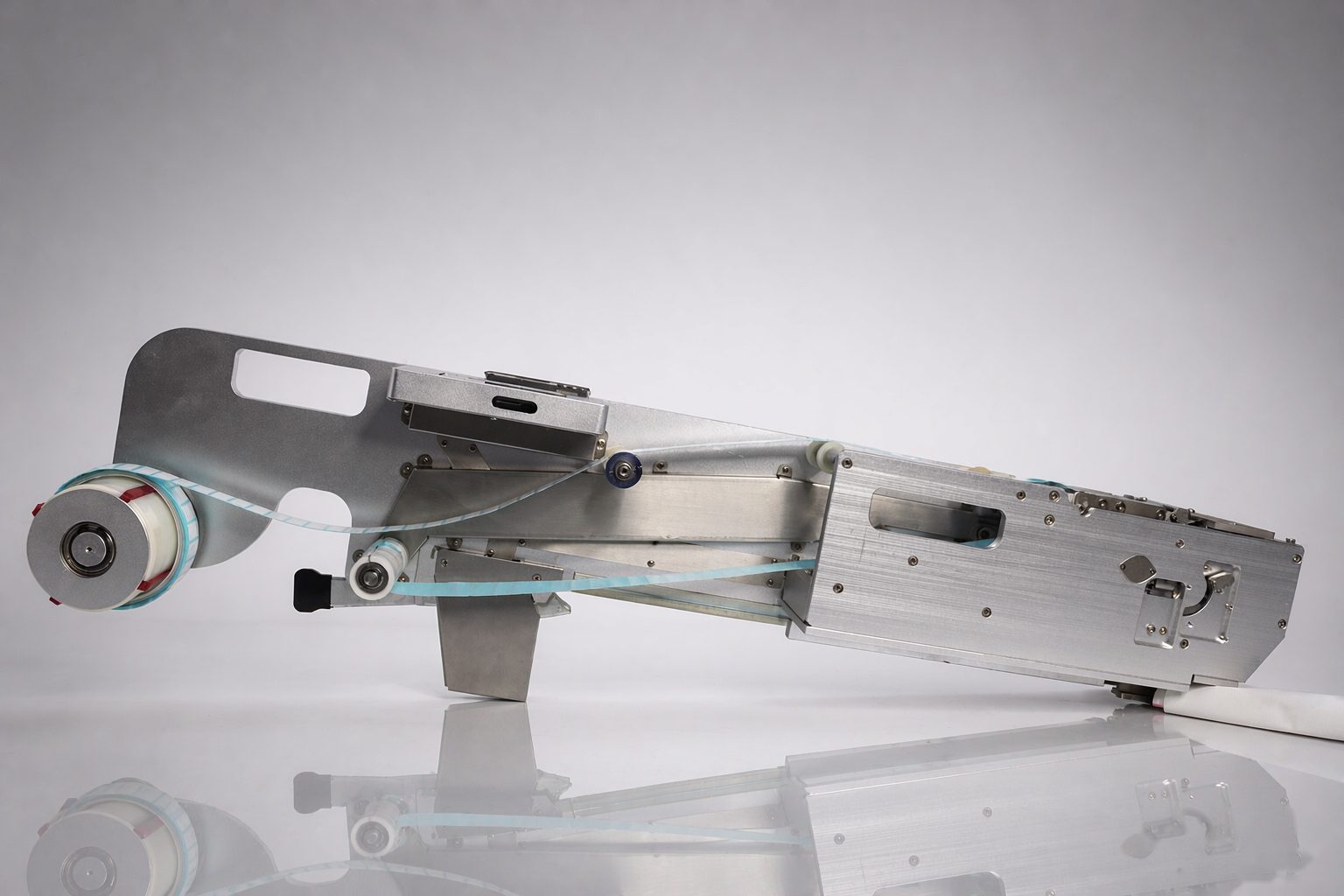
Shop-floor photo: label feeders for Panasonic NPM and CM series
This article is compiled from typical configurations of similar production lines; specific parameters and configurations are subject to actual incoming material and machine model.