
Conclusion
Installing a label feeder comes down to four things on site: whether the power supply is sufficient, whether the environment is suitable, whether the body is protected, and whether the incoming material is ready. In the manual these four items are written in two places—important precautions and application scope. Going through them before assembly saves more time than finding problems after installation and reworking.
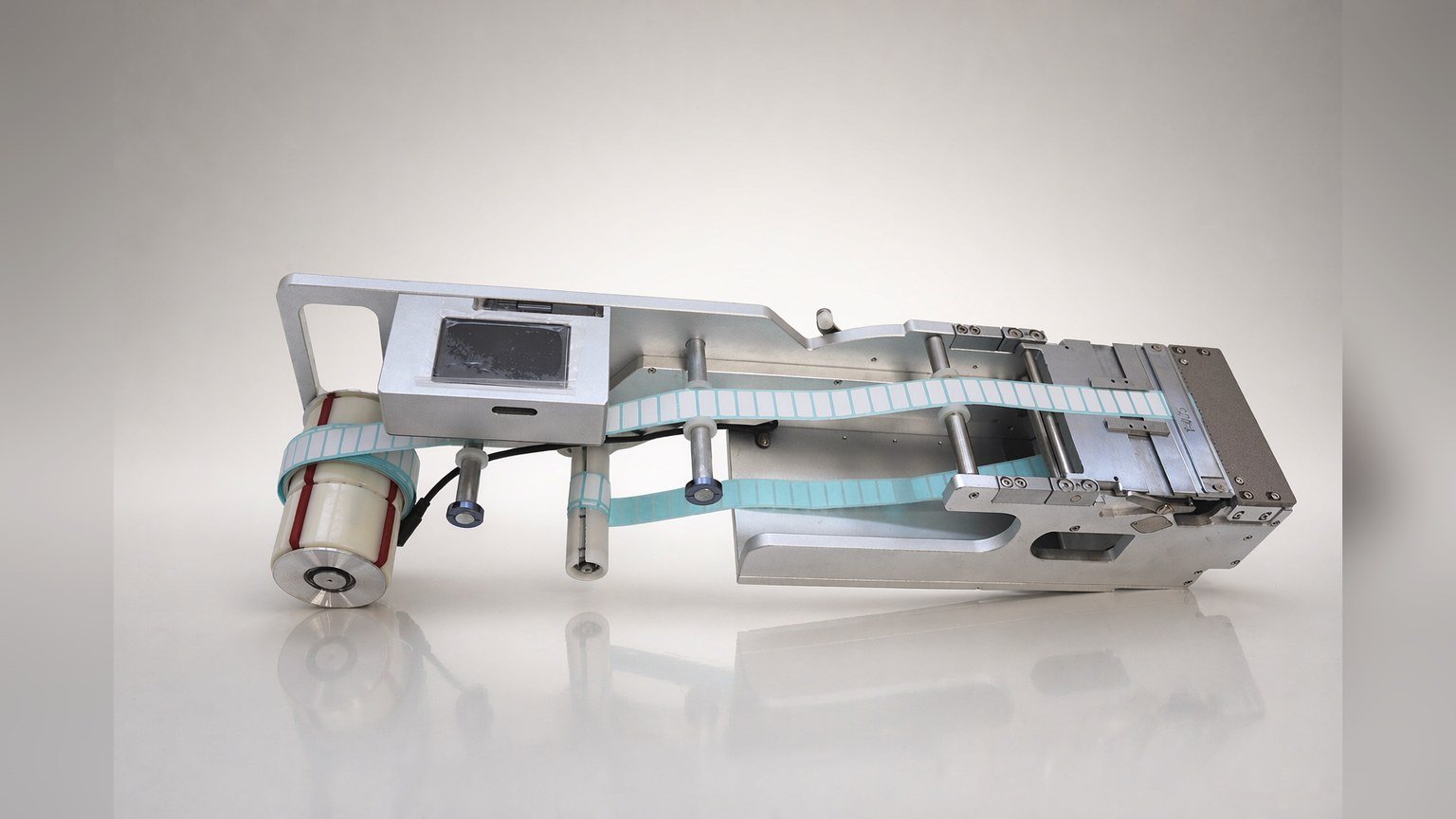
Power supply: 24 V DC, power supply current must reach 2 A or more
The feeder’s operating voltage is 24 V DC, and the rated current of the power supply needs to be 2 A or more. The manual gives exactly these two figures: operating voltage 24 V, current greater than 2 A. What is measured here is the supply capacity on the power supply side, not the feeder’s power consumption.
Another point that is easy to overlook: do not share a power plug with high-power equipment. The label feeder is servo-driven, and the current at the instant the feeding action starts is considerably higher than the average value; when connected to the same plug as a high-power load, simultaneous operation of both sides will pull down the voltage on each other.
Environment: avoid heat sources, water immersion, and volatile solvents
The manual gives several boundaries for the operating environment:
- Do not expose directly to sunlight and other heat sources;
- Wipe with a dry, soft cloth, and do not use cleaners containing volatile substances;
- Do not contact or be exposed to acids and alkalis, water immersion, or humid environments;
- The housing, LED screen, interfaces, and component circuits must be protected from foreign matter intrusion, and from cracking, rusting, and damage.
These describe the operating boundaries of the housing and electronic parts, and have nothing to do with how fast the feeder runs, but they determine whether it can remain stable over the long term.
In the industry, SMT workshops usually control temperature at 20~28 ℃ and relative humidity at 40%~60%. This is a common practice in electronic assembly and does not constitute a specification of this machine. When arranging the installation position, it is more practical to avoid direct airflow from air conditioners, ovens, and reflow soldering heat sources.
Body: the peeling knife and receiving platform must be protected from impact
The peeling knife and receiving platform must not be subjected to impact, and must not be contaminated with dirt; collisions between feeders and between the feeder and other objects should be avoided. The manual describes this type of collision as “minor damage,” and the actual point is the peeling knife angle and the flatness of the receiving surface—once the peeling position deviates, feeding becomes unstable.
Installation, repair, addition, or removal should all be performed by personnel authorized by our company.
Incoming material: first confirm whether roll material can be used
The application scope is written fairly broadly: roll materials such as paper labels, FPC reinforcing steel sheets, Mylar tape, foam, dust-proof mesh, and high-temperature tape can all be used.
One feeder is compatible with materials of different sizes within its size range, and also supports single-row or multi-row. Before loading, confirm three things: the roll width, whether the roll inner diameter and outer diameter fall within the feeder’s limit range, and whether the backing paper can be peeled smoothly. When mounted on a placement machine for inline labeling, there is no need to buy a separate labeling machine.
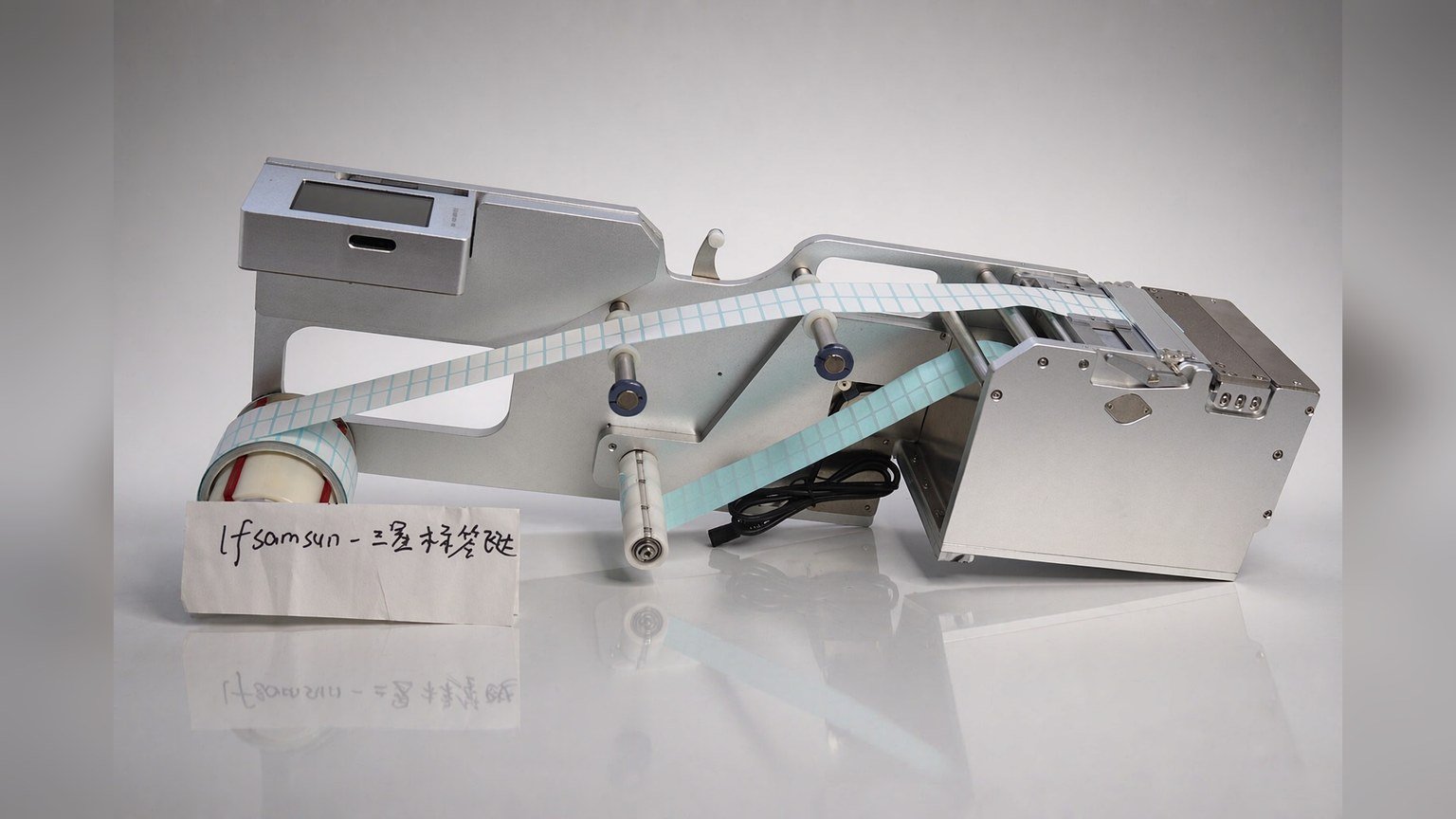
Why these items should be confirmed before installation
The feeder’s parameters are adjusted according to samples before leaving the factory. What the on-site power supply, environment, and incoming material determine is whether it can run these parameters stably. Among them, power supply capacity and incoming material specifications are hard conditions, while environment and protection are long-term conditions. If the hard conditions are not met, alarms will occur repeatedly during the debugging stage; if the long-term conditions are not met, problems often appear only after a period of use.
A self-check before installation
- Power supply: 24 V DC, capacity 2 A or more, dedicated socket;
- Environment: no direct sunlight, not near heat sources, no volatile solvents, no water immersion;
- Body: no impact or dirt on the peeling knife and receiving platform;
- Incoming material: roll width and outer diameter within limits, single-row or multi-row confirmed, backing paper peelable.
Only after all four items pass should the machine be mounted and the position adjusted. For the method of position adjustment, see Two-stage label position adjustment.
Send us these four items before installation
The 24 V DC power supply capacity available on site, the heat sources and liquid sources around the installation position, whether the incoming material is single-row or multi-row, and the roll specifications. For model-level power supply and installation details, see Label Feeder; the corresponding model for the Siemens (ASM) D series platform is LFSID-100, and the corresponding model for the ASM X series platform is LFSIX-32. The two manuals are written on the corresponding model pages.