
Conclusion
Roll feeders handle continuous incoming material. Appliance and power supply plants also have another type of material: pre-cut single sheets—nameplates, insulating gaskets, foam pads—large in size, low in quantity, and different from batch to batch. For this type of material, the PLF-300 takes a different approach: stacked in a magazine, fed out and peeled one sheet at a time; any sheet no wider than 300 mm can run on the machine.
Production line and the original labeling method
This plant makes power modules and appliance control boxes. Nameplates are applied to the product housings, and insulating gaskets are applied inside. Nameplates are aluminum foil or PET, pre-cut into single sheets and cut together with the backing paper; insulating gaskets are made of barley paper or Mylar, larger in size, mostly rectangular with notches.
Making this type of material in rolls isn’t cost-effective: each product needs tens to hundreds of pieces, and the cost of a roll die can’t be amortized, so suppliers all deliver pre-cut single sheets. The original method was manual: peel the backing paper, align the position, press flat—one person can’t do much in a day, and the positions still don’t line up.
Selection: why the PLF-300
The PLF-300 is a sheet feeder with a body of 970 × 483 × 260 mm and a weight of 60 kg. Material is stacked in the magazine, fed out sheet by sheet, and then peeled.
Three parameters determine how large a material it can handle: backing paper length 50~350 mm, peeling width no more than 300 mm, and magazine depth 150 mm. Nameplates and insulating gaskets both fall within this range, so there’s no need to make a dedicated fixture for each size—the magazine just needs to be adjusted to the sheet outline.
Compared with roll feeders, its value isn’t in speed but in material type. Pre-cut single sheets, notched shapes, small batches, and size changes between batches—roll feeders can’t handle any of these cases.
On-machine setup and debugging
Before loading, adjust the magazine limits to the sheet outline. Sheets must be stacked flush; even a slight skew will cause double feeds later. Adjust the peeling opening height to the backing paper thickness: too high and it won’t pull, too low and it will bend the sheet.
The most time-consuming part of debugging is the notched insulating gaskets. The notch position determines the center of the sheet; if the magazine limits are aligned to the outer frame, the pickup position will be off. The solution is to locate by the notch, then adjust the pickup coordinates accordingly.
Nameplates are easier to handle: regular in size and rigid enough, so parameters can be set conventionally.
Changes after going on-machine
Labeling nameplates and gaskets changed from manual to machine pickup, with positions determined by coordinates rather than by eye. For this plant, the more practical change is material changeover: when switching products, change a stack of sheets and adjust the limits once—no more fixtures.
Incoming tolerances for sheets are larger than for rolls, so allowance must be left during debugging. Specific cycle time and yield figures are subject to customer statistics and are not cited in this article.
FAQ
How large a material can the sheet feeder handle? The PLF-300 has a peeling width of no more than 300 mm and a backing paper length of 50~350 mm; larger sizes require evaluation as a non-standard solution.
Can it be mounted directly on a pick-and-place machine? Yes, the interface and mounting structure can be made according to the machine model, or it can be configured at a standalone labeling station, depending on how the line is arranged.
How should the tolerance of pre-cut sheets be handled? Incoming tolerances require allowance during debugging; magazine limits and pickup coordinates should be adjusted to the actual sheet stack, not set from drawings.
To check against your sheet dimensions and incoming material method, contact us directly: Kenny Pan · Sales Manager · Phone/WeChat +86 134 2139 1163 · Sales@baxida-tech.com
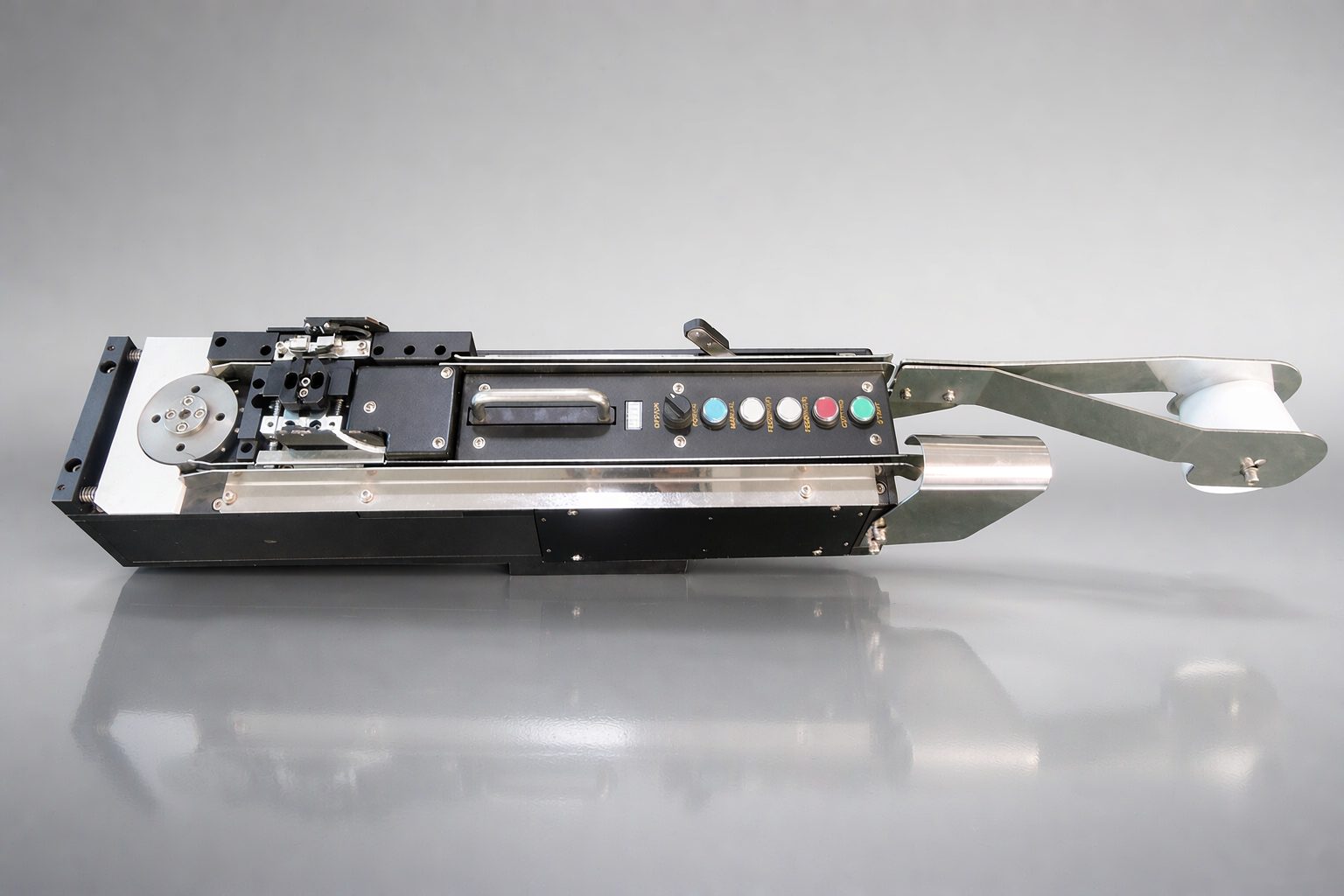
Shop floor photo: sheet and odd-form material feeder
This article is compiled based on typical configurations of similar production lines; specific parameters and configurations are subject to actual incoming material and machine model.